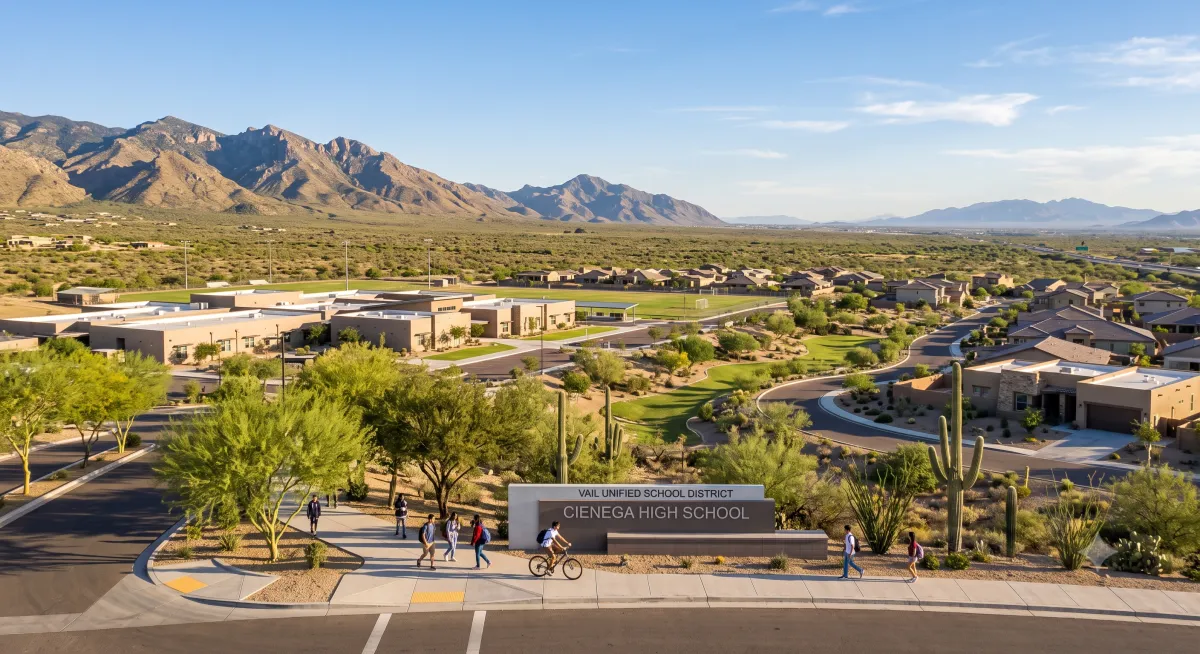
Living in Vail, AZ: Top Schools & New Homes Guide
Drive southeast out of Tucson, past the saguaros and into the Rincon Valley, and you will reach Vail — one of the fastest-growing and most sought-after communities in Pima County. With a 2026 population near 17,000 and a growth rate north of 2.5 percent a year, Vail has become the answer for families who want newer homes, more space, and one of the best public school systems in Arizona.
That school system is the headline. The Vail Unified School District is consistently ranked among the top districts in the state, drawing families from across the region. Campuses like Cienega High School and the Vail-area academies earn statewide recognition, and programs such as early-college and dual-enrollment options let students earn university credit before they graduate. For many buyers, getting into VUSD boundaries is reason enough to choose Vail.
The lifestyle matches the schools. Vail offers a genuine rural feel — dirt roads, big skies, and room for horses or a homestead — while staying close enough to Tucson that the commute via Interstate 10 is manageable. Master-planned neighborhoods like Rancho del Lago, Rocking K, and Coyote Creek deliver newer single-family homes, trail access, and golf at Del Lago, while buyers who want acreage can still find ranch and horse properties at reasonable prices.
The numbers tell their own story. Vail's median household income tops $130,000 with one of the lowest poverty rates in the area, signaling a community of established, invested families. Home inventory skews newer — a mix of builder communities and custom desert estates — with median sale prices that remain competitive against metro Tucson.
Outdoor access is a quiet superpower here. Vail sits at the doorstep of Saguaro National Park (East), Colossal Cave Mountain Park, the riparian corridor of Cienega Creek, and the Arizona National Scenic Trail. Add the Pima County Fairgrounds, the Tucson Dragway, and the annual fall fair, and there is no shortage of weekend plans.
It is worth knowing that Vail is unincorporated, so it leans on Pima County for services and is still building out parks, libraries, and retail to match its booming population — though projects like the Esmond Station Regional Park and new shopping are steadily filling the gaps. For most residents, that small-town, still-growing character is exactly the charm.
If your wish list reads "great schools, newer home, mountain views, and breathing room — without losing Tucson access," Vail belongs at the top of your search.
